Costly Signaling Framework
A theory room for thinking about how actors communicate resolve under uncertainty, and why some signals become credible while others remain cheap talk.
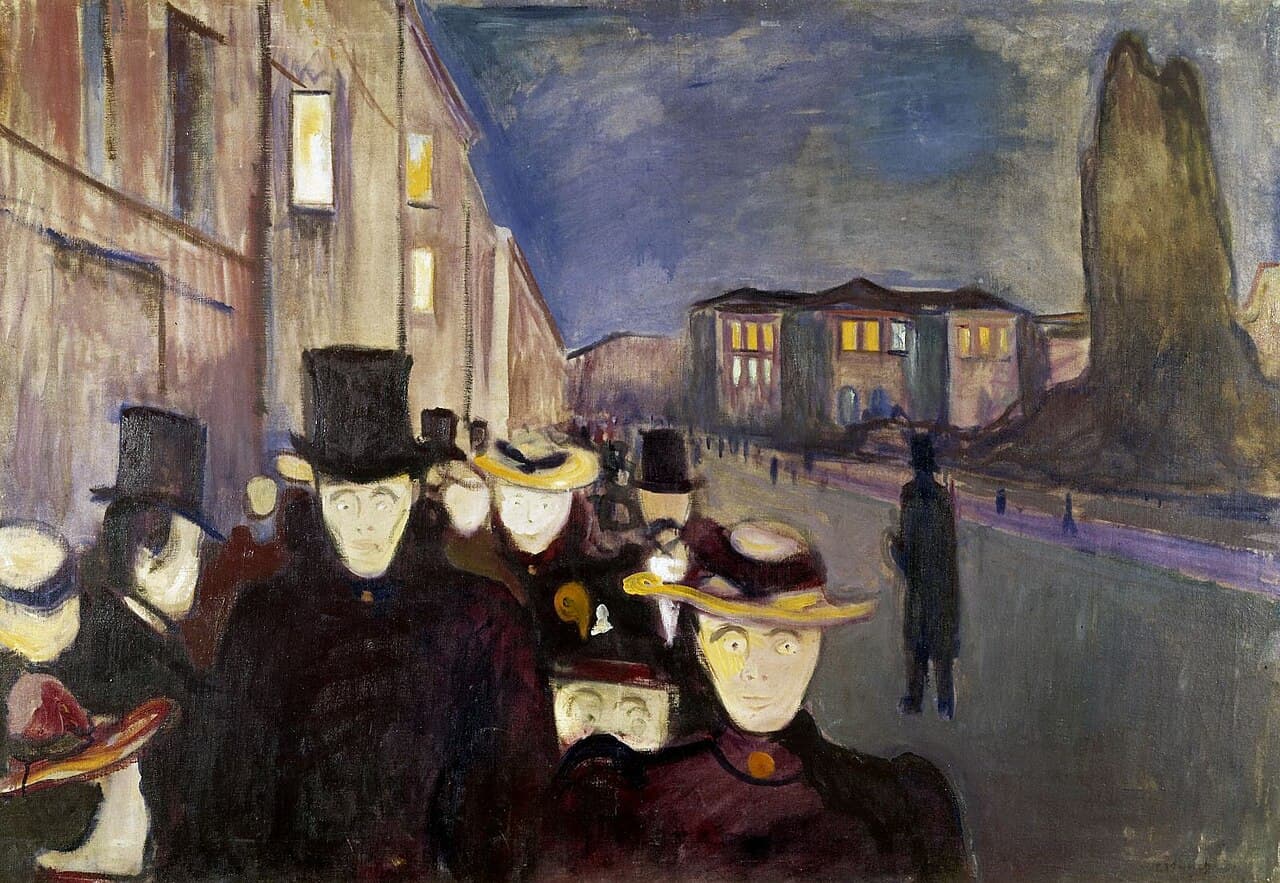
The core puzzle is simple but stubborn. States do not directly see one another’s resolve. They see statements, commitments, risks, costs, and delays. Like figures passing under a streetlamp, the signal is visible, but the intention behind it still has to be inferred.
Overview
Strategic interaction under uncertainty is the starting point of this thesis. In international politics, states rarely know with certainty how capable, resolved, or constrained their rivals actually are. A government may claim willingness to defend a critical interest or sustain costly policy over time, yet others must decide whether that signals genuine commitment or strategic exaggeration. The core issue is therefore not only what states want, but how their intentions are interpreted by others.
Game theory aids this analysis by modeling politics as actors making choices while anticipating rival’s responses to those choices. This logic is especially relevant for international politics because threats, commitments, and foreign policy statements are not only verbal claims. They are observable moves that may shape beliefs about state resolve.
The problem of interpretation becomes more difficult when information is asymmetric. One actor may possess private information about its own type, capabilities, interests, or willingness to bear costs, while other actors can only infer that information indirectly (Akerlof, 1970; Spence, 1973). In such settings, words alone are inadequate because different types of actors can make the same verbal claim (Crawford & Sobel, 1982).
Uncertainty and asymmetric information
A state that is genuinely resolved and a state that is merely pretending to be resolved may both declare that they will defend an interest or continue a policy. The receiver therefore needs more than a statement. It needs evidence that separates genuine commitment from cheap talk (Crawford & Sobel, 1982; Fearon, 1994).
Costly signaling addresses this problem by linking communication to sacrifice (Spence, 1973). A signal becomes informative when it imposes costs that a less committed actor would be unwilling or unable to bear (Fearon, 1997). In economic signaling models, the sender possesses private information about its type, while the receiver updates beliefs after observing a signal.
A signal becomes credible when it is differentially costly across types. In other words, it must be easier or more worthwhile for the high commitment type to send than for the low commitment type to imitate. Although this logic was first developed outside international relations, it became important for political science because states also face problems regarding hidden information.
Rivals cannot directly observe resolve. Allies cannot always distinguish reassurance from empty promise. Third party states cannot know whether a great power’s policy is temporary bargaining or durable commitment. Hence, this is why costly signaling became central to the analysis of international crises, deterrence, and foreign policy commitments in contemporary politics.
Fearon’s framework
This thesis applies costly signaling to international politics, using Fearon’s framework as its central theoretical anchor. In Fearon’s framework, the key problem is that leaders often want their threats to be believed without actually having to carry them out. A state may prefer a rival to comply without conflict, but the rival knows that even an unresolved state may pretend to be willing to fight or escalate. This creates a credibility problem.
If both resolved and unresolved states can make the same claim, a resolved state must therefore find a way to distinguish itself from an unresolved one. Fearon’s answer is that threats become credible when sending them creates costs or risks that an unresolved actor would be less willing to incur. As he explains, when leaders assess each other’s willingness to use force, the dilemma is how a genuinely resolved state can persuade the target that it is not bluffing (Fearon, 1997).
The costly signaling framework is important because it shifts the analysis of international signaling away from statements alone and toward the strategic structure that makes statements credible. In international politics, actors do more than announce preferences. They take costly actions that reshape how others assess their credibility. A threat, warning, commitment, or policy stance gains meaning only when it alters the receiver’s belief about the sender’s future behavior.
Tying hands
The first canonical mechanism, tying hands, generates credibility (Fearon, 1997). A tying-hand signal creates costs that are paid only if the sender backs down after making a commitment. These costs are not necessarily paid when the signal is first sent. Instead, they become relevant later, especially when the sender fails to follow through.
Audience costs are the clearest example. When a leader publicly declares that national prestige, credibility, or a vital interest is at stake, retreat becomes politically and reputationally costly. Credibility emerges since the leader has raised the cost of retreat. Fearon defines tying hands as taking an action that increases the cost of backing down if the challenger actually challenges, while otherwise entailing no cost if no challenge materializes (Fearon, 1997).
Tying hands matter because credibility hinges on future costs. A leader may not pay a cost immediately when making a public commitment, but the commitment changes the future payoff of retreat. Backdown triggers failure perceptions among domestic audiences, foreign observers, bureaucracies, or allies, thus transforming the original statement from cheap talk into a binding commitment. The sender has made its future behavior more observable and indeed more punishable.
Sunk costs
The second mechanism works through sinking costs. A sunk-cost signal imposes costs upfront, before the receiver decides whether to challenge (Fearon, 1997). Unlike tying hands, the cost is not contingent on later retreat. It has already been paid.
In traditional security politics, examples include troop mobilization, military deployments, weapons procurement, or other costly actions that absorb resources before the outcome is known. A less resolved actor would hesitate to pay an irreversible cost, making the signal credible. Fearon defines sunk-cost signals as actions costly upfront but altering neither the relative value of fighting nor backing down if challenged later (Fearon, 1997).
What makes the distinction between tying hands and sunk costs critical is that it reveals different costs of structure, not merely costly versus less costly signals. Tying hands changes the future cost of retreat while sunk costs demonstrate commitment through costs already incurred. Different cost structures generate credibility through distinct channels. Public commitments create future reversal penalties; material expenditures demonstrate absorbed costs. If the analysis only says that “costly policies are credible,” it misses the mechanism that explains why and how credibility is produced.
The distinction also clarifies a key tradeoff: tying-hands signals are strategically attractive yet risky. Fearon notes that leaders often prefer them over sunk costs, as they communicate resolve without upfront payment unless the sender later retreats. However, this same advantage can create a greater ex ante risk of conflict, because the sender may become locked into a future course of action (Fearon, 1997).
Part-way signals
Fearon’s framework also addresses bluffing, the case when weak or “part-way” signals backfire (Fearon, 1997). Leaders avoid partial costly signals and then failing to follow through, as receivers infer insufficient resolve when stronger options exist. If a state sends only a limited signal, the receiver may infer that the sender was unwilling to send a fully convincing one.
Fearon terms this the “part-way” signal problem: weak efforts suggest the sender avoided stronger, convincing signals. This is why signaling is not simply about doing something. Sometimes a half-lit signal is worse than silence, because it reveals that the sender had the option to illuminate the room and chose not to.
Existing International Relations scholarship has since applied Fearon’s two costly signaling mechanisms to diplomacy, deterrence, reputation, cyberwarfare, and institutions (Dafoe, Renshon, & Huth, 2014; Gartzke & Lindsay, 2017; Sartori, 2005; Trager, 2016). Yet the central problem remains the same across these applications: under uncertainty, what kind of action can make a receiver believe that the sender is not bluffing?
Quek’s extension
While Fearon’s two mechanisms provide the foundation, Quek reveals that they represent only two cells of a broader two-by-two typology (Quek, 2020). The two mechanisms identified by Fearon can be reconstructed along two dimensions: when costs are paid and whether costs are contingent on future behavior.
The first dimension is timing. Some costs are ex ante, meaning they are paid upfront before the receiver’s response or before the final outcome is known. Other costs are ex post, meaning they are paid after the signal has been sent. The second dimension is contingency. Non-contingent costs are paid regardless of what the receiver does or whether the sender follows through. Conversely, contingent costs depend on later behavior, especially whether the sender follows through or backs down. By separating these two dimensions, Quek shows that Fearon’s two mechanisms are part of a broader four-part typology (Quek, 2020).
Sunk costs
Costs paid upfront and not recovered regardless of the receiver’s response.
Reducible costs
Costs paid upfront but partly offset if the sender follows through.
Installment costs
Future costs paid over time regardless of the receiver’s response.
Tied-hands costs
Future costs paid only if the sender backs down.
Table 1. Four costly signaling mechanisms, adapted from Quek’s two-by-two typology of cost timing and cost contingency.
The value of this typology is not simply that it adds new labels to Fearon’s framework, but because it clarifies the structure of credibility itself. Costly signals differ according to timing and contingency. A policy that imposes costs immediately sends a different message from one that commits the sender to future implementation. Likewise, a cost paid regardless of the receiver’s response carries a different logic from a cost that depends on whether the sender follows through.
Installment costs are particularly relevant because many strategic signals are not one-shot actions but ongoing commitments. In Quek’s term, installment costs are fixed future costs that will be paid regardless of how the receiver responds, and that are incurred in one or more tranches over a time horizon rather than all at once (Quek, 2020). Unlike sunk costs, which are paid ex ante, installment costs are ex post and non-contingent, so their credibility effect depends on whether observers expect the sender to keep paying them in the future.
Reducible costs add depth to the analysis because some costly policies are not simply losses. They may become strategically valuable if the sender follows through. Reducible costs are paid upfront, but they can be offset later through successful implementation. This mechanism differs from ordinary sunk costs because the initial expenditure is not merely burned; the sender can convert it into future advantage (Quek, 2020).
Quek’s experimental findings also complicate the assumption that all costly signals work in the same way. He argues that sunk costs, tied-hand costs, and installment costs improve credibility mainly when costs are high, whereas reducible costs can improve credibility even at lower levels of costs (Quek, 2020).
Taken all together, Fearon and Quek provide the core signaling vocabulary for this framework. Fearon’s tying hands and sunk cost mechanisms show how credibility can arise from future penalties or from costs that have already been paid. Quek’s installment and reducible costs extend this logic to policies and commitments that unfold over time and may allow partial cost recovery.
References
Akerlof, G. A. (1970). The market for “lemons”: Quality uncertainty and the market mechanism. The Quarterly Journal of Economics, 84(3), 488–500.
Crawford, V. P., & Sobel, J. (1982). Strategic information transmission. Econometrica, 50(6), 1431–1451.
Dafoe, A., Renshon, J., & Huth, P. (2014). Reputation and status as motives for war. Annual Review of Political Science, 17, 371–393.
Fearon, J. D. (1994). Domestic political audiences and the escalation of international disputes. American Political Science Review, 88(3), 577–592.
Fearon, J. D. (1997). Signaling foreign policy interests: Tying hands versus sinking costs. Journal of Conflict Resolution, 41(1), 68–90.
Gartzke, E., & Lindsay, J. (2017). Thermonuclear cyberwar. Journal of Cybersecurity, 3(1), 37–48.
Quek, K. (2020). Four costly signaling mechanisms. Unpublished manuscript.
Sartori, A. (2005). Deterrence by diplomacy. Princeton University Press.
Spence, M. (1973). Job market signaling. The Quarterly Journal of Economics, 87(3), 355–374.
Trager, R. F. (2016). The diplomacy of war and peace. Annual Review of Political Science, 19, 205–228.